U.S. intelligence flights over Nigeria signal deepening security cooperation amid rising terror threats
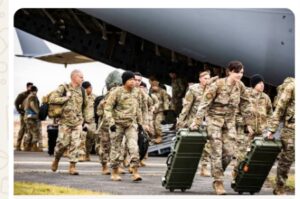
The United States has intensified intelligence-gathering operations over Nigeria since late November, conducting near-daily surveillance flights across large parts of the country, according to flight tracking data and multiple current and former U.S. officials.
The development signals a significant expansion in U.S.–Nigeria security cooperation as both countries confront escalating militant violence and regional instability.
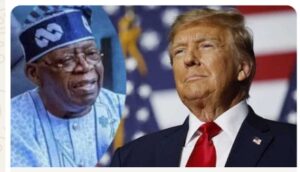
While the specific intelligence objectives of the flights remain unclear, the operations come against the backdrop of heightened diplomatic and security tensions following U.S. President Donald Trump’s November warnings of possible military intervention in Nigeria over continued attacks on Christian communities.
Flight tracking data reviewed by Reuters indicate that the contractor-operated aircraft typically departs from Accra, Ghana, flies over Nigerian airspace, and returns to the Ghanaian capital. The aircraft is operated by Mississippi-based Tenax Aerospace, a company that provides special mission aircraft and works closely with the U.S. military. Tenax Aerospace declined to comment on the operations.
Analysts say Accra has increasingly emerged as a logistical hub for U.S. military activity in West Africa. Liam Karr, Africa Team Lead at the American Enterprise Institute’s Critical Threats Project, said the flights suggest Washington is rebuilding regional intelligence capacity following Niger’s decision last year to expel U.S. forces and pivot toward Russia for security assistance.
“In recent weeks, we’ve seen a resumption of intelligence and surveillance flights in Nigeria,” Karr said, noting that the move reflects a broader recalibration of U.S. counterterrorism posture in the Sahel and West Africa.
A former U.S. official said the aircraft was among several assets relocated to Ghana in November and that the missions include efforts to locate a kidnapped U.S. pilot seized in neighboring Niger, as well as to gather intelligence on militant groups operating in Nigeria.
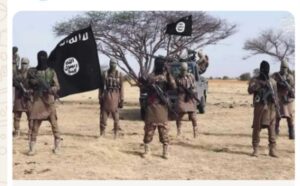
These include Boko Haram and its splinter faction, the Islamic State West Africa Province (ISWAP), both of which continue to pose serious security threats.
A current U.S. official confirmed that surveillance flights have been taking place over Nigeria but declined to provide details, citing diplomatic sensitivity. Another administration official said Washington remains engaged with Abuja to address “religious violence, anti-Christian attacks, and the destabilising spread of terrorism.”
Background: Security Pressures Mount
Nigeria is facing one of its most severe security crises in years, marked by mass kidnappings, attacks on civilians, and expanding militant activity across several states.
President Bola Tinubu last month declared a security emergency, ordering mass recruitment into the army and police to counter worsening violence, including the abduction of more than 300 schoolchildren in northern Nigeria.
Nigeria’s government has repeatedly rejected claims that Christians are uniquely targeted, arguing that armed groups attack both Muslims and Christians and that the crisis reflects complex security challenges rather than religious persecution.
However, Abuja has agreed to deepen cooperation with the U.S. to strengthen its counterterrorism capabilities.
A Nigerian security source said an agreement was reached during a November 20 meeting between National Security Adviser Nuhu Ribadu and U.S. Defense Secretary Pete Hegseth for the deployment of U.S. air assets to support intelligence gathering. Nigerian military officials declined to comment.
Flight data show the Tenax Aerospace aircraft, a modified Gulfstream V commonly used for intelligence, surveillance, and reconnaissance missions, was sighted at MacDill Air Force Base in Florida—home to U.S. Special Operations Command—on November 7 before flying to Ghana on November 24.
Diplomatic and Economic Implications
The expanded surveillance operations coincide with a tougher U.S. stance toward Nigeria. In October, Washington re-designated Nigeria as a country of concern for religious freedom violations. This week, Nigeria was also added to a U.S. travel restriction list, imposing partial entry limitations.
President Trump has reportedly instructed the Pentagon to prepare for potential rapid military action should Nigeria fail to curb violence against Christian communities.
The two countries have since established a joint security task force, according to U.S. lawmakers familiar with the discussions.
Analysts warn that while enhanced intelligence cooperation could bolster Nigeria’s fight against terrorism, the broader diplomatic fallout—including travel restrictions and security-related sanctions—could weigh on investor sentiment, international trade relations, and Nigeria’s economic outlook if tensions escalate.
.globalfinancialdigest